
Basic financial models focus on revenue, costs, and profit projections. However, advanced financial modeling goes beyond simple forecasting. It incorporates dynamic assumptions, scenario simulations, valuation techniques, risk modeling, and multi-statement integration.
Advanced financial models are used in:
- Investment banking
- Corporate finance
- Private equity
- Startup valuation
- Strategic planning
This article explains key advanced financial modeling techniques used by professionals.
1. Three-Statement Financial Modeling
One of the most important advanced techniques is building an integrated 3-statement model:
- Income Statement
- Balance Sheet
- Cash Flow Statement
All three statements are linked dynamically.
Why It Matters
Changes in revenue affect:
- Net income
- Retained earnings
- Cash position
- Working capital
Everything must balance properly.
📸 Suggested Image:
Three-statement financial model layout
Image Source:
https://upload.wikimedia.org/wikipedia/commons/5/5f/Income_statement_example.png
2. Dynamic Assumption-Driven Models
Advanced models separate assumptions from calculations completely.
Example structure:
Assumptions Section
- Growth rate
- Inflation rate
- Tax rate
- Cost escalation rate
Instead of hardcoding numbers, use references:
=Revenue_Last_Year * (1 + Growth_Rate)
This allows quick scenario adjustments without breaking formulas.

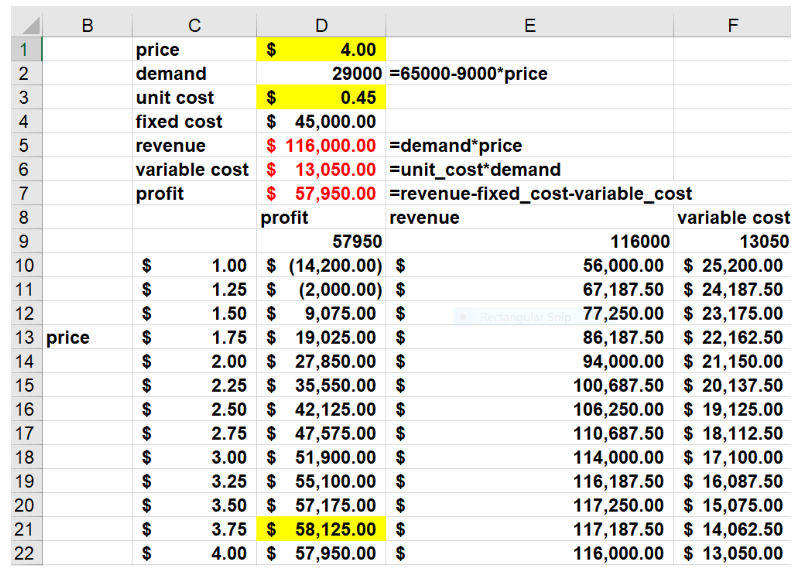
3. Sensitivity Analysis
Sensitivity analysis tests how sensitive results are to changes in assumptions.
Example:
- How does profit change if growth rate varies between 5% and 15%?
Use:
- Data Tables (What-If Analysis)
- Two-variable data tables
This is crucial for risk analysis and investor reporting.
4. Scenario Modeling (Best, Base, Worst Case)
Unlike simple forecasting, advanced scenario modeling incorporates:
- Macroeconomic changes
- Cost shocks
- Market downturn assumptions
Professional models allow switching scenarios dynamically using:
- Scenario Manager
- Dropdown-driven assumptions
This improves decision-making under uncertainty.
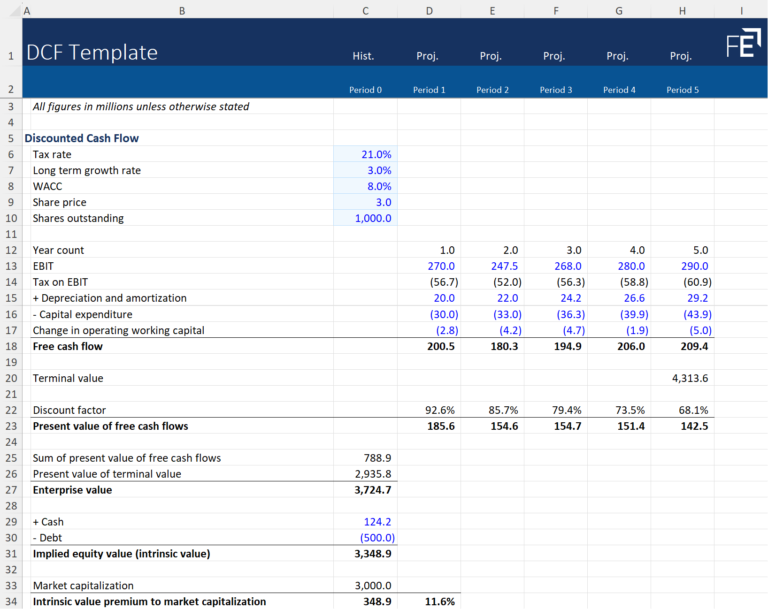
5. Discounted Cash Flow (DCF) Valuation
DCF is a core technique used in company valuation.
Basic DCF Formula:
=Future_Cash_Flow / (1 + Discount_Rate)^n
Where:
- Discount Rate = Cost of Capital
- n = Number of years
DCF helps determine the present value of future cash flows.
It is widely used in:
- Investment analysis
- Business valuation
- Mergers and acquisitions
6. Monte Carlo Simulation (Risk Modeling)
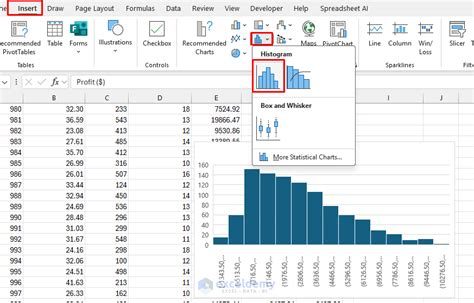
Instead of testing fixed scenarios, Monte Carlo simulation runs thousands of simulations using probability distributions.
Used for:
- Risk forecasting
- Investment return modeling
- Project viability assessment
Although Excel requires add-ins or advanced formulas, it provides powerful probabilistic analysis.
7. Working Capital Modeling
Advanced models include:
- Accounts Receivable days
- Inventory turnover
- Accounts Payable days
Example formula:
=Revenue / 365 * Receivable_Days
Working capital modeling affects:
- Cash flow
- Liquidity
- Financing needs
It is essential in corporate finance.
8. Debt and Interest Modeling
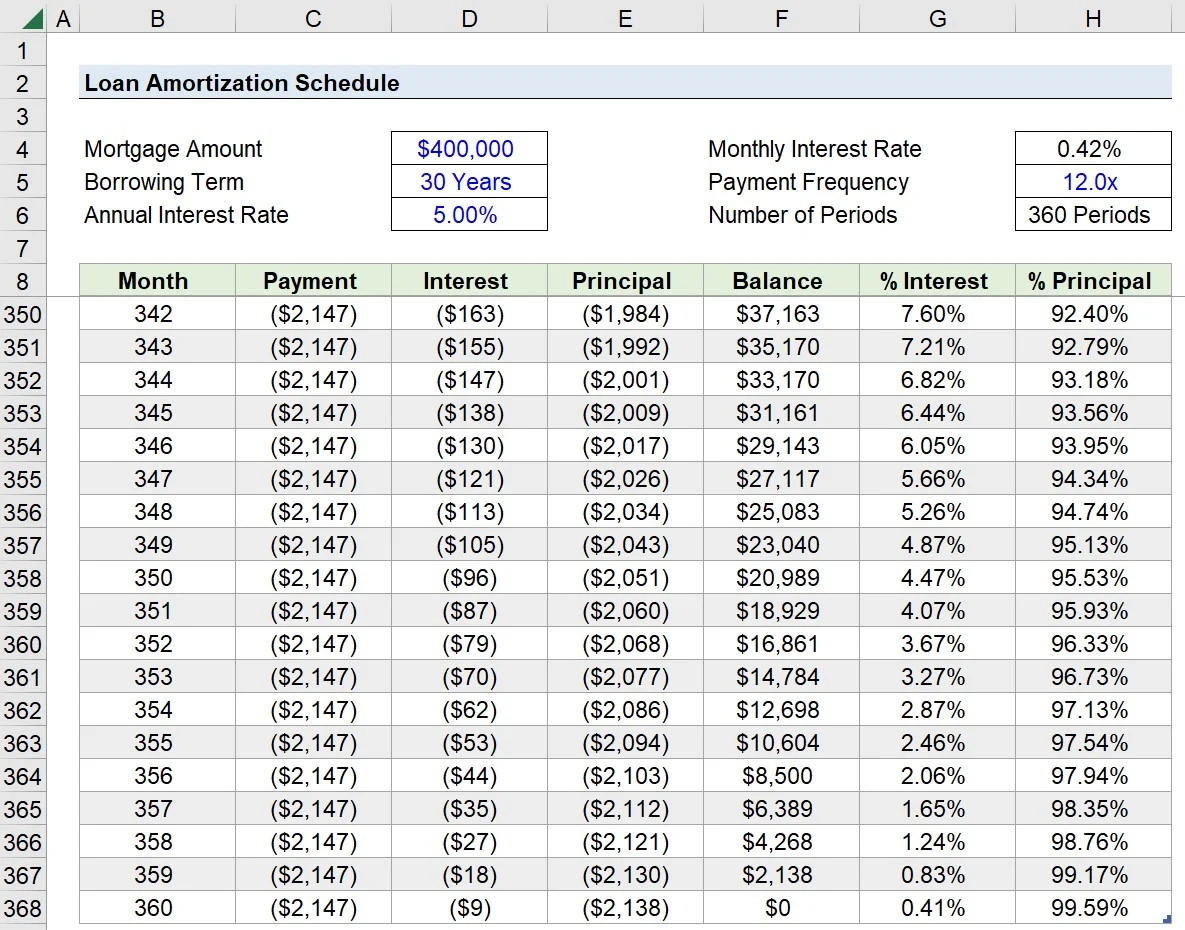
Professional models forecast:
- Loan balances
- Interest payments
- Principal repayments
Interest formula example:
=Outstanding_Debt * Interest_Rate
This affects:
- Net income
- Cash flow
- Balance sheet leverage
Debt modeling is crucial for leveraged buyouts (LBOs).
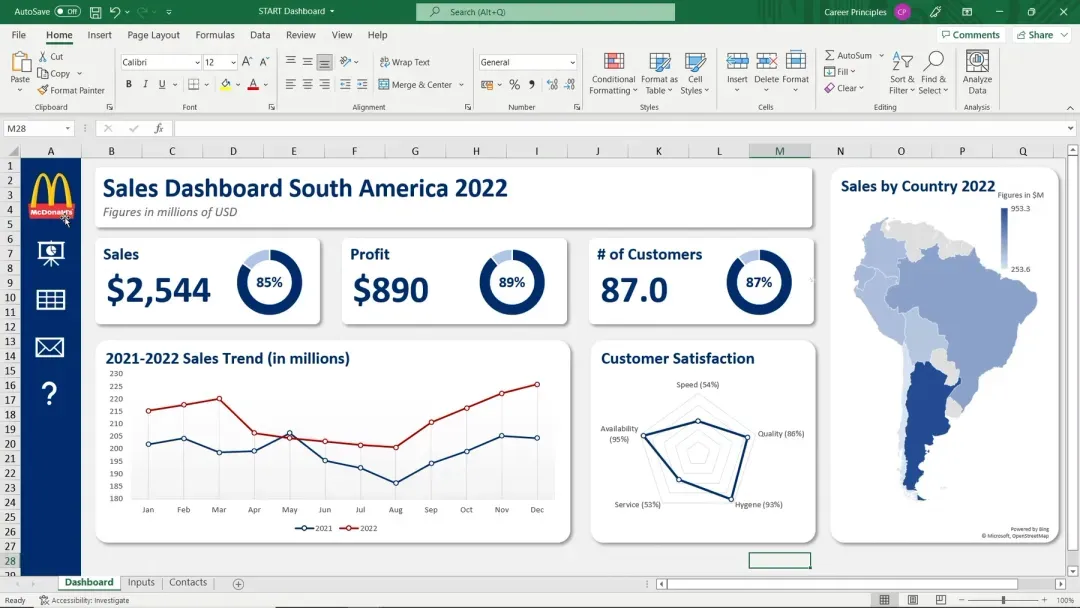
9. Dynamic Dashboard Integration
Advanced financial models often include dashboards that display:
- Revenue growth trends
- EBITDA margins
- Cash position
- Key ratios
Use:
- Pivot Tables
- Charts
- Slicers
Dashboards improve executive communication.
10. Model Auditing and Error Checking
Advanced models include built-in checks:
- Balance Sheet balancing test
- Circular reference detection
- Error flags
Example error check:
=IF(Total_Assets=Total_Liabilities_Equity,"OK","Error")
Auditing ensures financial integrity.
Best Practices in Advanced Financial Modeling
- Separate inputs, calculations, and outputs
- Use consistent formatting
- Avoid hardcoding numbers
- Document assumptions clearly
- Use color coding (Inputs = Blue, Formulas = Black)
- Keep models transparent and logical
Professional financial models prioritize clarity over complexity.
Common Mistakes to Avoid
- Overcomplicating logic
- Ignoring real-world constraints
- Not stress-testing assumptions
- Failing to link statements properly
- Ignoring cash flow impact
Accuracy and structure matter more than visual appeal.
Conclusion
Advanced financial modeling techniques transform Excel into a powerful strategic decision-making tool. From integrated three-statement models to DCF valuation, scenario modeling, and risk simulation, these techniques are essential in professional finance environments.
Mastering advanced modeling is not about creating complex spreadsheets — it is about building structured, assumption-driven, dynamic systems that support intelligent financial decisions.