
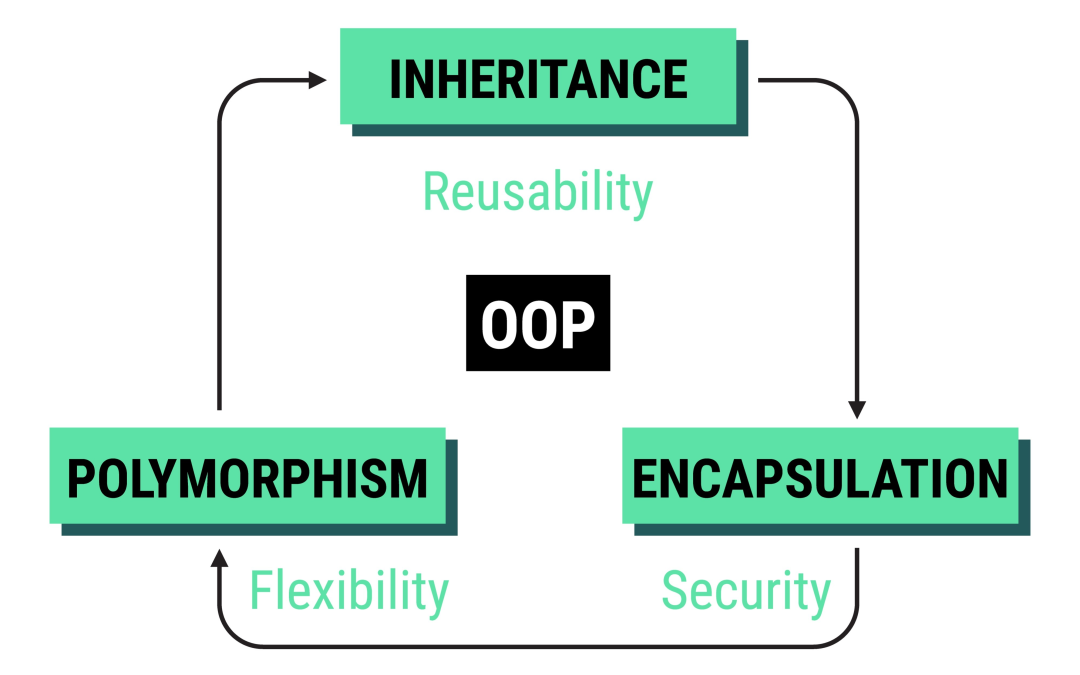
In the early days of coding, most people wrote “procedural” code—a long list of instructions executed from top to bottom. But as applications grew into complex giants, this became impossible to manage. Enter Object-Oriented Programming (OOP). OOP is a paradigm that allows you to group data and the functions that handle that data into individual units called “Objects.” It’s the difference between having a pile of loose car parts and driving a fully assembled vehicle.
What is a Class vs. an Object?
To understand OOP, you must understand the relationship between a Class and an Object.
- The Class: This is the blueprint. It defines what attributes (data) and methods (behaviors) something should have.
- The Object: This is the “instance.” It is the actual physical item built from that blueprint. If “Car” is the class, your specific red Tesla sitting in the driveway is the object.
The Four Pillars of OOP
Python’s OOP power comes from four core concepts that help you organize and protect your code.
1. Encapsulation: The “Black Box” Principle
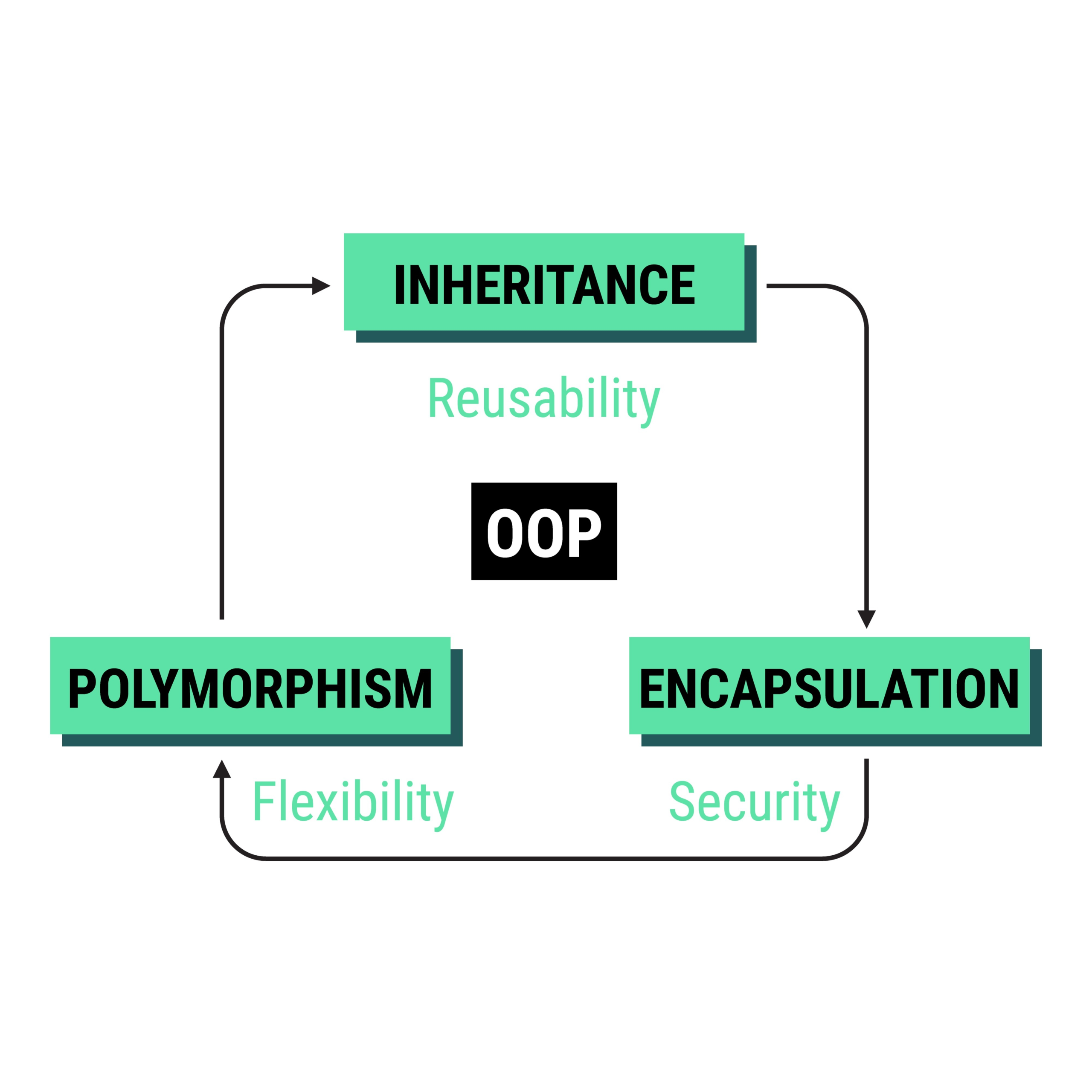
Encapsulation is the practice of bundling data and methods inside a single unit and restricting access to the inner workings. In Python, we use underscores (e.g., _price) to signal that a variable is “private.” This prevents outside code from accidentally breaking the internal logic of your object.
2. Abstraction: Hiding Complexity
Abstraction means showing only the necessary details to the user and hiding the background “noise.” When you use a remote control, you care about the “Volume Up” button; you don’t need to understand the infrared signals or circuitry inside. In code, abstraction allows you to create simple interfaces for complex processes.
3. Inheritance: Reusing Blueprints
Inheritance allows one class to take on the attributes and methods of another. This creates a hierarchy. For example, you might have a general class Employee and a specific class Manager that inherits everything from Employee but adds its own unique “bonus” calculations.
4. Polymorphism: Many Forms
Polymorphism allows different classes to be treated as instances of the same general class through the same interface. For instance, both a Dog and a Bird class might have a method called speak(). For the dog, it returns “Woof,” and for the bird, it returns “Chirp.” You can trigger speak() on any animal without needing to know exactly what species it is beforehand.
Putting it into Practice: A Simple Example
Here is how you define a class and create an object in Python:
Python
class Smartphone:
    def __init__(self, brand, model):
        # Attributes
        self.brand = brand
        self.model = model
        self._battery_level = 100  # Encapsulated attribute

    # Method
    def make_call(self, number):
        print(f"Calling {number} from your {self.brand} {self.model}...")

# Creating an Object
my_phone = Smartphone("Apple", "iPhone 15")
my_phone.make_call("555-0199")
Why OOP Matters for Your Career
While procedural code is fine for small scripts, major frameworks like Django, Flask, and TensorFlow are built entirely on OOP principles. Understanding how objects interact allows you to:
- Reduce Redundancy: Stop repeating the same code blocks.
- Improve Debugging: If the “engine” is broken, you know exactly which object to look at.
- Model Real-World Problems: It is much easier to code a “Bank Account” or “User Profile” when you treat them as distinct objects with their own properties.
Common Pitfalls to Avoid
- Over-Engineering: Don’t create a complex class hierarchy for a simple 10-line script. Use OOP when the project complexity warrants it.
- Self-Induced Confusion: Always remember to include the
selfparameter in your methods. In Python,selfrepresents the specific instance of the object you are working with. - Deep Inheritance: Avoid creating “Grand-Grand-Grand-Child” classes. If your inheritance tree is too deep, your code becomes brittle and hard to follow.
Conclusion
Object-Oriented Programming is more than just a syntax; it’s a way of thinking. By shifting your focus from “actions” to “objects,” you build software that is modular, easier to test, and ready for the enterprise level. Start by looking at your current scripts and identifying “things” that could be grouped together into a class—your future self will thank you for the organization.